Most players think they’re playing a game of shots.
But the highest levels of pickleball are not decided by forehands or flicks. They are decided by how well you move, how patiently you wait, and how much your opponent expects you to behave a certain way, and how willing you are to betray that expectation.
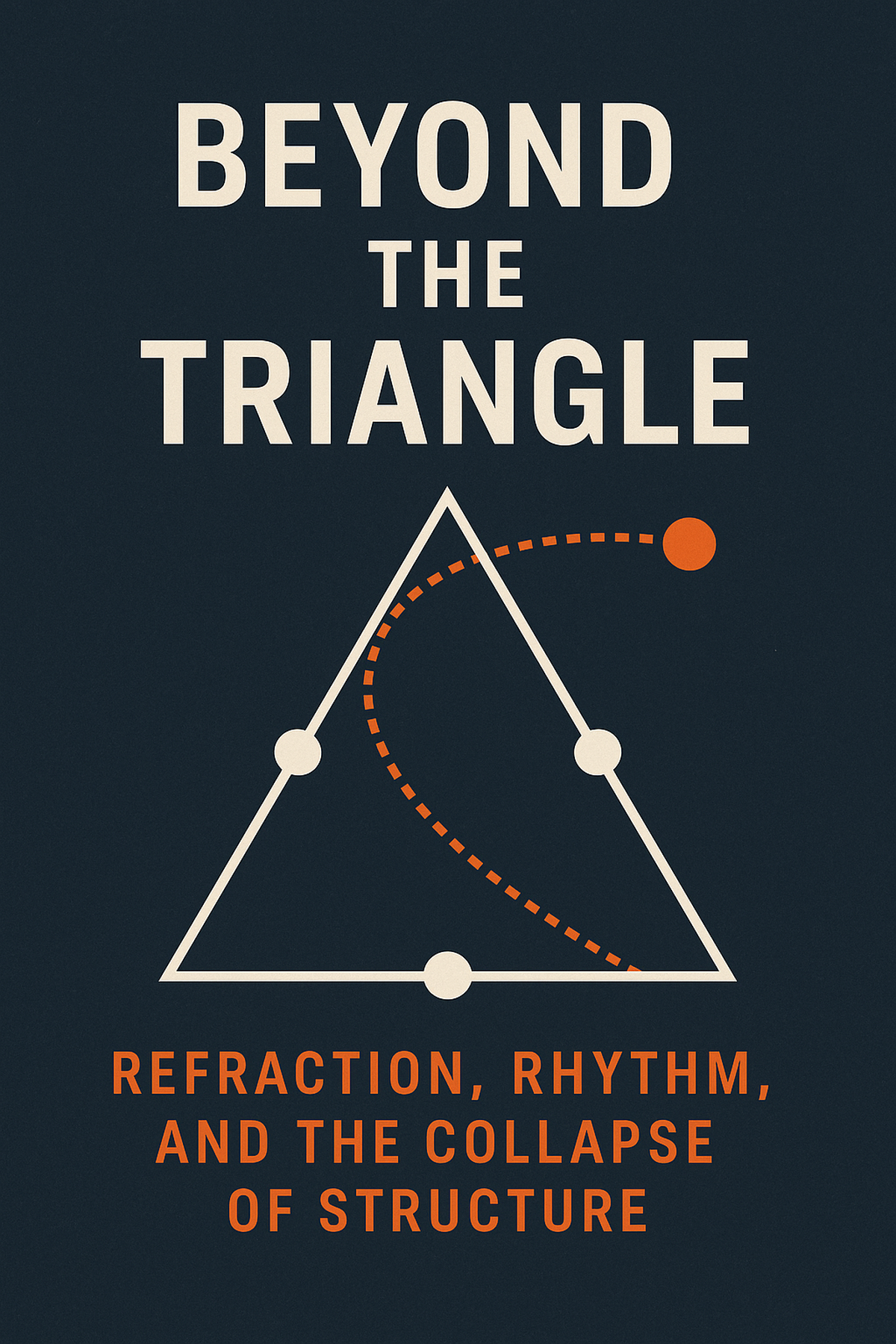
At the heart of this is the triangle. A simple visual: you, your partner, and the ball forming three anchor points. It is the gold standard for spacing, responsibility, and coverage. It gives order to chaos. It helps teams move in sync. But order can become vulnerability when too strictly followed.
The triangle works. But it is a system that assumes the opponent is playing the game the same way you are.
The moment they are not, the triangle starts to crack.
What the Triangle Does Well
The triangle is brilliant in theory. It offers clarity in a fast game where spacing errors can cost points. It helps define roles: who goes, who holds, who shadows. It gives shape to movement and distributes angles logically.
If one player moves left, the other mirrors. If the ball is to the right, one plays and the other protects. If opponents drop or drive, the triangle shifts and absorbs.
So far, so good. But here’s the hidden truth. The triangle is based on prediction, not on reality.
It assumes:
- The ball will follow its intended trajectory
- The bounce will be clean and consistent
- The attacker will strike early and into familiar zones
- You and your partner will see the same thing at the same time and move with equal timing
As soon as one of those things changes, the triangle becomes a guess.
The Power of the Bounce: Refraction Alters Everything
Let’s isolate a single moment.
You drop the ball crosscourt. The opposing player is there early, but they let the ball bounce. You and your partner draw the triangle. You take middle, they take sideline. You’ve built the shape. You’re set.
Then everything changes.
The bounce alters the ball’s path. Spin causes the angle to shift just a few degrees. It sits up slower than expected. Or it accelerates forward off a flatter bounce. Now your triangle is pointed in the wrong direction.
The opponent sees this and moves not where the ball was supposed to go, but where it just did go.
That shift is the crack in your structure.
It doesn’t matter if you were ready. You were ready for a different version of the point.
Movement That Waits, Then Breaks Pattern
Players who move well, not just fast, but with rhythm and pause, do not rush into the ball. They do not commit to geometry. They wait. They let the bounce give them a second read. Then they strike along a new axis.
This is not passive play. This is control.
The triangle is based on striking early. Early contact preserves angles. It keeps timing on your side.
But waiting changes the physics. When a player waits for the bounce, they gain more time to observe and react. Their decisions come from actual ball behavior, not projected paths. They are not reacting to your shot. They are reacting to what your shot becomes.
This subtle delay gives them the edge.
You thought you had the edge because you held structure.
But they now have more accurate information than you do.
And they are using it to move not with the rhythm, but against it.
More Movement, Better Movement
Let’s get something straight. Movement is not about sprinting across the court on every ball. It is about showing patterns, breaking them, and using the court’s space to create hesitation in the opponent.
The triangle works when movement is predictable.
But when a player starts using deceptive footwork, a fake step wide followed by a flash through the middle, or a hold into the corner followed by a sharp reset up the line, they are distorting geometry.
They’re not playing against two players. They’re playing against the assumptions those players are making.
This is movement as pressure. Movement as manipulation.
They are not just in better position. They are forcing your triangle to over-adjust. To shift one time too many. And that is when seams open.
What Happens When the Triangle Overcommits
When you move in triangles, you move as a unit. You rely on harmony. But if one player rotates early and the other hesitates, the shape tears.
The more your opponent moves intelligently, the more they force you to move defensively.
At first, it looks like you’re holding structure. You’re in your spot. Your partner is in theirs.
But your triangle is behind the ball. The ball has moved again. Or the opponent has moved again. Or they’ve waited long enough to make you guess again.
Now your triangle is no longer protecting space. It is following it.
Geometry only works when you are ahead of the problem.
Once you start solving after the fact, your structure becomes lag. You’re always late.
Real Game Scenarios
Picture this:
- A player lets the ball bounce at the kitchen line, steps wide as if they’ll crosscourt dink, then flicks a low ball down the line. Your triangle had prepared for a soft ball. It is now broken.
- A lob comes over your head. You sprint back. Your partner covers middle. The returning player floats wide and resets short into your diagonal blind spot. They didn’t beat you with power. They beat you with timing and angle.
- A crosscourt battle is happening. They lull you into repeating two or three triangle rotations. You think you’re in rhythm. Then one explosive step and a roll flick breaks your position while your partner is still mid-slide.
In each case, movement, well-timed, slightly late, or exaggerated, changes the pace of the rally more than the paddle ever could.
Why This All Works
Because most players build their game around location.
Smart players build their game around perception.
They are not hitting shots at you. They are hitting into your systems. Into your defaults. Into your formations.
And when they use bounce, pause, and rhythm to gather more accurate data, they are no longer guessing. They are solving.
You, on the other hand, might still be following a triangle drawn three shots ago.
Final Takeaway
Use the triangle. Teach it. Understand it. But don’t worship it.
Because the triangle is just a starting shape.
It gives clarity. It brings order. But it also assumes control that is rarely guaranteed.
Players who move more, and move smarter, can fracture that order. Especially when they wait for bounce. Especially when they shift angles mid-rally. Especially when they use their feet to create second chances instead of swinging early.
The triangle only works when the opponent gives you permission to keep it.
The moment they take that permission away?
It is no longer about what shape you formed.
It is about how quickly you can reshape.
Leave a Reply